
Destination
Light, Salt, and the Art of Arrival
There is a reason painters, sailors, and the perpetually stylish keep coming back to Mykonos: the light. It falls differently here — sharpening the white of the houses, deepening the blue of every door, turning an ordinary afternoon into something cinematic. Mykonos mastered glamour long before glamour had a hashtag, and it still does it better than anywhere that tries.
But everyone can reach Mykonos; few arrive properly. The island at its best begins with a villa above the water rather than a hotel corridor, a skipper who knows which cove is empty at noon, a table held at sunset while the rest of the island is still calling for one. Mykonos rewards timing, access, and a certain restraint — the confidence to do less, better.
The days write themselves. A long lunch of grilled fish and chilled Assyrtiko, bare feet in the sand, no end time in sight — the truest Mykonian luxury. Beaches for every temperament, from the pulse of Nammos and Scorpios to quiet coves that never make anyone's feed. By boat, the untouched shores of Rhenia are an hour away, and beside them Delos — the sacred island where the ancient world still holds court in absolute silence, an astonishing counterpoint to the evening ahead.
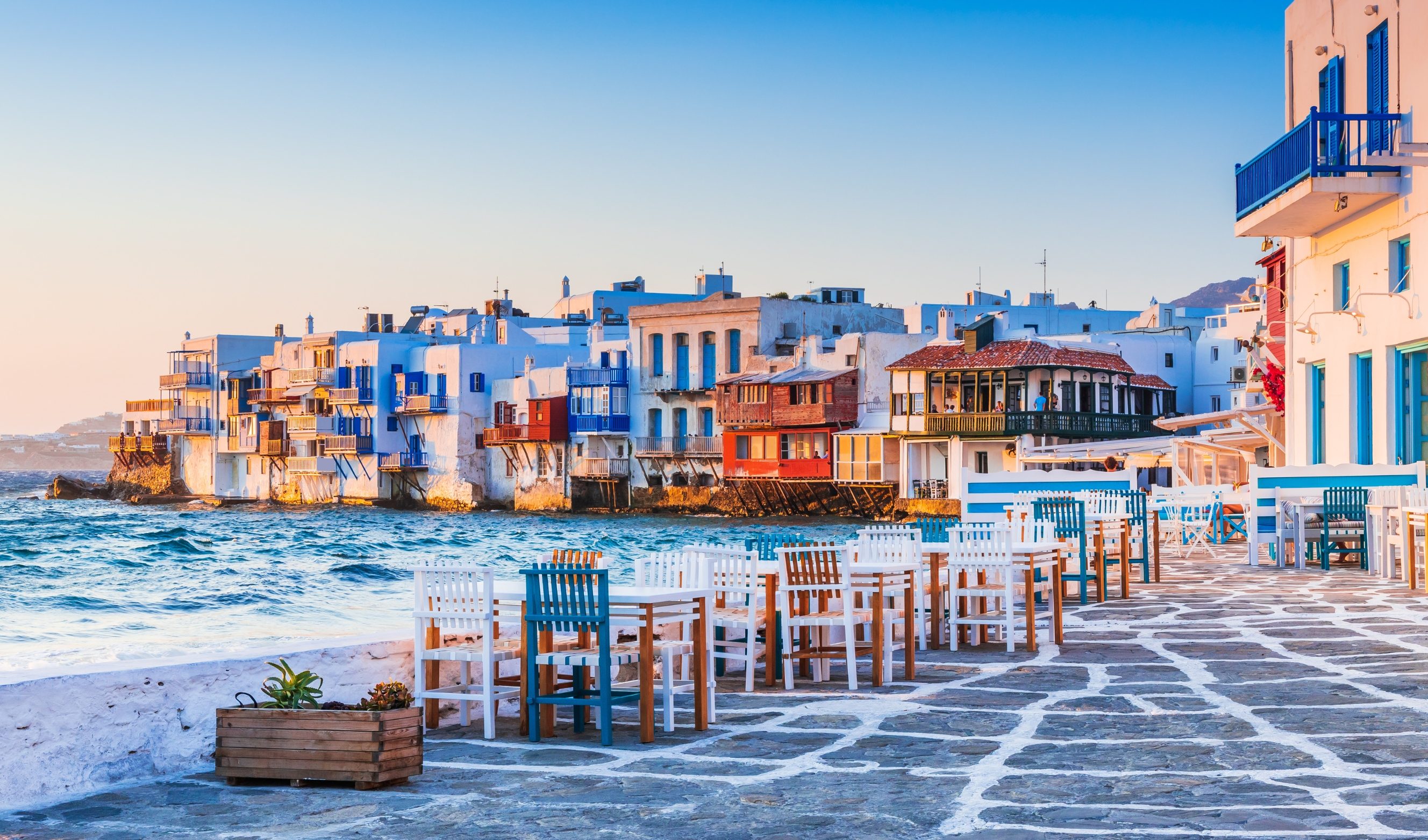
Because the evenings, of course, belong to Chora: a white labyrinth of lanes at its most alive after dark, galleries and cocktail bars tucked behind bougainvillea, Little Venice catching the last of the light as the sea comes nearly to the tables.
June and September are the connoisseur's months — full warmth, softer crowds, the island at its most gracious. July and August belong to those who come for the pulse.
Mykonos, done properly, isn't a party or a postcard. It's a rhythm — and once you've found it, every other summer is measured against it.